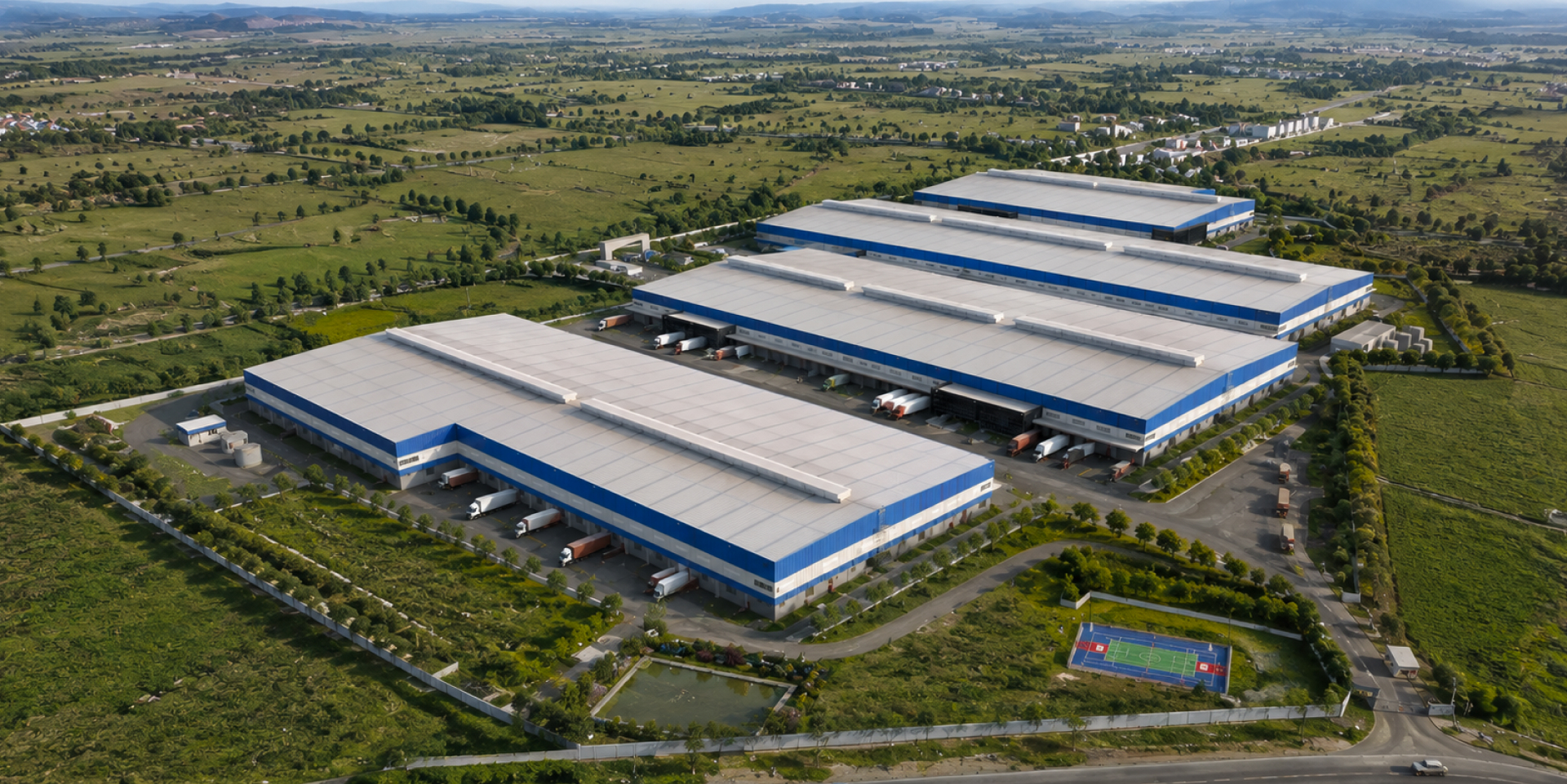


The industrial landscape of Tamil Nadu is undergoing a profound structural metamorphosis, transitioning from a collection of isolated manufacturing clusters into a series of highly sophisticated, integrated industrial and logistics ecosystems. This evolution is the product of a deliberate, long-term state strategy aimed at achieving a $1 trillion economy by 2030, a goal that requires a sustained 15% annual growth rate in the manufacturing sector. As the state with the largest number of operational factories in India—exceeding 40,100 units—Tamil Nadu is leveraging its historical dominance in the automotive and textile industries to pivot toward high-value, future-ready segments such as electric vehicles (EV), advanced electronics, and aerospace.
The convergence of massive public infrastructure projects and progressive policies is redrawing the map of industrial real estate in India, creating a globally competitive environment for occupiers and investors alike.
The Infrastructure Backbone: Driving Multi-Modal Efficiency
Tamil Nadu’s economic trajectory is defined by a unique model of decentralised urbanisation and industrialisation. To support this, the state is investing in generational infrastructure that enhances the logistics ecosystem in Tamil Nadu.
- Mappedu Multi-Modal Logistics Park (MMLP): As India’s first MMLP awarded under the PM Gati Shakti plan, this 184-acre facility is being developed with a project cost of ₹1,424 crore. By integrating road and rail, the MMLP is expected to handle 7.17 million metric tonnes of cargo and reduce logistics costs by 20–25%.
- Industrial Corridors: Every district in the state is now covered by at least one industrial corridor project. The expansion of the Chennai-Bengaluru Industrial Corridor (CBIC) and the Chennai-Kanyakumari Industrial Corridor (CKIC) ensures that every hub is linked to major maritime gateways and consumer markets.
High-Growth Nodes: The Rise of Hosur and Sriperumbudur
Strategic locations are transforming into specialised powerhouses, fueling Tamil Nadu’s industrial growth.
Hosur: The EV Frontier
Once a satellite town, the Hosur industrial hub has emerged as a global powerhouse for electric vehicles and advanced electronics. Its proximity to Bengaluru’s tech ecosystem allows businesses to tap into R&D while benefiting from Tamil Nadu’s aggressive industrial facilitation. Hosur is now a “nerve center” for the electric two-wheeler revolution, hosting major facilities for EV giants and global smartphone supply chains. Infrastructure like the proposed Bengaluru Metro extension and the high-speed BCIC expressway will reduce travel times significantly, further boosting its appeal.
Sriperumbudur: The Strategic Pivot
The Sriperumbudur logistics hub remains the most developed industrial corridor in South Asia. While it has long been the “Detroit of Asia” for automotive, it is now undergoing a strategic pivot toward advanced electronics and high-end engineering. A unique feature of this ecosystem is the proximity of supplier networks; an OEM can find Tier-1, 2, and 3 suppliers within a 50-kilometre radius, enabling efficient Just-In-Time (JIT) manufacturing.
The Decisive Shift Toward Grade A Industrial Real Estate
As manufacturing scales, the demand for sophisticated facilities has surged. Occupiers are no longer looking for simple storage; they require “Industrial Urbanism”—ecosystems that facilitate speed, safety, and sustainability.
The preference has shifted toward Grade A warehouse Tamil Nadu assets, which represent 95% of new supply in Chennai. These facilities are defined by:
- Technical Excellence: High clear heights (10m–12.5m) for high-bay racking and FM2-compliant flooring to support automated robotics and VNAs.
- Sustainability: Global MNCs now prioritise IGBC Platinum/Gold pre-certified parks that support ESG goals through solar readiness, water stewardship, and natural daylight integration.
- Industrial Housing: To solve the bottleneck of workforce retention, the state and developers are integrating large-scale housing within the industrial ecosystem, such as massive women’s hostels for electronics manufacturing hubs.
Policy Catalysts: The 2026 Warehousing Policy
Tamil Nadu is pioneering regulatory reforms to modernise the sector. The Tamil Nadu Warehousing Policy 2026 is designed to promote large-scale, inclusive development across Tier-2 and Tier-3 cities.
Key reforms include:
- Industry Status: All existing and upcoming warehousing units will be granted “Industry Status,” removing plot coverage restrictions and extending the State Single Window Clearance mechanism to the sector.
- Operational Efficiency: The policy increases the maximum permissible warehouse height to 24 meters and offers a 50% subsidy on technical training for employees.
- Green Incentives: A 25% subsidy is provided for sustainable initiatives beyond mandatory norms, encouraging carbon-neutral operations.
KSH INFRA: Enabling Future-Ready Industrial Ecosystems
KSH INFRA are the essential partners in this transformation. By delivering industrial parks Tamil Nadu that align with the state’s multi-modal infrastructure, KSH INFRA enables global manufacturers to scale rapidly.
KSH INFRA’s developments focus on:
- Strategic Positioning: Aligning with the major industrial corridors and upcoming aerotropolis zones for maximum logistics advantage.
- Built-to-Suit Scalability: Offering customised infrastructure that meets the heavy-load flooring and high-power requirements of modern EV and electronics assembly.
- Institutional Quality: Providing ESG-compliant, tech-enabled facilities that adhere to the highest international standards of safety and operational efficiency.
Conclusion: A Powerhouse in Progress
The infrastructure boom in Tamil Nadu has created a unique “moment of convergence” where progressive governance, institutional investment, and mega-projects are aligning to redefine the state’s industrial standing. As Tamil Nadu moves toward its $1 trillion goal, the integration of high-spec manufacturing with world-class logistics ecosystems will remain the decisive factor in India’s global industrial success.
Head Office
Gokhale Sanchit, Office No. 4, Survey No. 846,
Servants of India Society, Near Marathwada College,
Shivajinagar, Pune, Maharashtra – 411 004 (India)
Call Us: +91 20 2970 4000.
Email: [leasing@kshinfra.com]
Visit: [www.kshinfra.com]
Let’s build the future of industry…together!


