

RICS South Asia recently organised a session on Unlocking India’s Next Growth Corridors. The session saw some of the strongest voices of the industry for 7 curated panel discussions. Shailesh Agrawal, Head, KSH INFRA Fund Management represented KSH INFRA in the session and shared some brilliant insights as stated below.
‘India’s Growth Story is About Economic Corridors, Not Individual Cities’
Shailesh, Head KSH INFRA Fund Management, highlighted that India’s next phase of industrial and logistics growth will be driven by integrated economic corridors rather than the traditional classification of Tier I, II or III cities. He emphasized that institutional investors increasingly evaluate regions based on the strength of their economic ecosystem—comprising infrastructure, manufacturing activity, connectivity and long-term occupier demand—rather than city labels.
Capital doesn’t invest in geography; it invests in ecosystems.”
The second important takeaway was
‘Infrastructure is the Foundation of Institutional Investment’
The discussion focused on the role of infrastructure in attracting long-term capital. The session highlighted initiatives such as Dedicated Freight Corridors, PM Gati Shakti and multimodal connectivity are fundamentally reshaping India’s industrial landscape by improving supply chain efficiency and enabling new manufacturing clusters.
During this session Mr. Shailesh emphasized that infrastructure creates the conditions for industry, employment, occupier demand and ultimately institutional investment.
Predictability Matters More Than Incentives
While discussing state-level competitiveness it was observed that institutional investors place greater value on policy consistency, efficient approvals and execution certainty than on short-term fiscal incentives.
“Institutional investors value certainty more than incentives.”

Sustainability Must Extend Beyond Green Buildings
A perspective that was presented by KSH INFRA was that sustainability should be viewed through four interconnected dimensions:
* Environmental sustainability
* Economic viability
* Social impact
* Governance
During this session it was highlighted by Mr. Shailesh that governance, transparency and disciplined capital allocation have become equally important considerations for institutional investors evaluating long-term assets.
ESG is no longer just a compliance exercise; it has become a framework for long-term risk management.
Manufacturing Will Drive the Next Phase of Logistics Growth
The discussion highlighted manufacturing as the fundamental demand driver for India’s industrial and logistics sector. As global supply chains diversify and domestic manufacturing expands, industrial corridors supported by strong infrastructure are expected to attract increasing occupier demand and institutional capital.
Pune–Chakan–Talegaon as a Blueprint for Future Growth
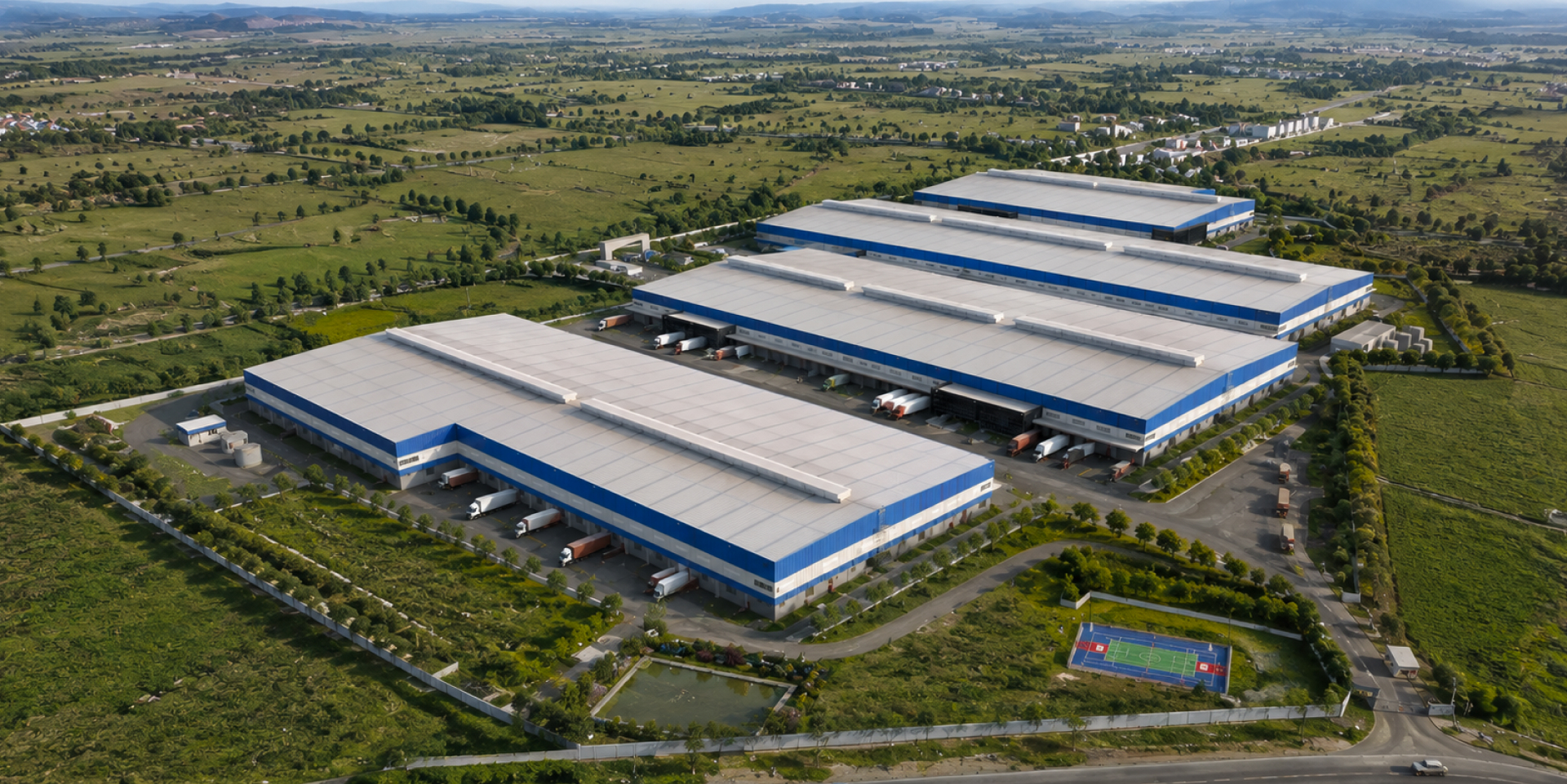
When discussing emerging growth corridors, Shailesh cited the Pune–Chakan–Talegaon industrial corridor as an example of a successful economic ecosystem where infrastructure, manufacturing, skilled talent and connectivity have come together to create a sustainable investment destination.He noted that similar integrated industrial ecosystems are likely to emerge across India over the coming decade.
The Future of Industrial Real Estate
The concluding point of the discussion was that that India’s industrial and logistics sector is entering a new phase characterised by institutionalisation, greater governance standards and long-term capital participation.
“The next generation of cities won’t grow in isolation—they’ll grow as integrated economic corridors where infrastructure, manufacturing and institutional capital come together.” – Mr. Shailesh Agrawal, Head, KSH INFRA Fund Management.
Head Office
Gokhale Sanchit, Office No. 4, Survey No. 846,
Servants of India Society, Near Marathwada College,
Shivajinagar, Pune, Maharashtra – 411 004 (India)
Call Us: +91 20 2970 4000.
Email: [leasing@kshinfra.com]
Visit: [www.kshinfra.com]
Let’s build the future of industry…together!


