

Introduction: The 2026 Supply Chain Challenge
As global and domestic supply chains evolve, 2026 is shaping up to be a decisive year for logistics and manufacturing leaders. Cost volatility, capacity constraints, and rising customer expectations are converging to make supply chain strategy a boardroom priority rather than an operational afterthought.
One of the most pressing challenges is transportation cost. Forecasts for 2026 indicate shrinking trucking capacity across key markets, a trend expected to trigger double-digit increases in freight rates. As a result, transportation is set to command an even larger share of total supply chain expenditure, putting pressure on margins across sectors.
In this environment, real estate decisions have taken on strategic importance. Well-located logistics and industrial facilities are no longer just about warehousing or production space; they are critical levers to shorten delivery distances, reduce transit times, and offset rising transportation costs.
This is where KSH INFRA’s vision becomes particularly relevant. By developing Grade A industrial parks in India’s most promising growth corridors, KSH INFRA is enabling businesses to use location as a hedge against inflationary pressures—building resilience into their supply chains well before cost escalations peak.
Reducing Costs Through Strategic Proximity
Transportation typically accounts for 50–70 percent of total logistics costs. Even marginal inefficiencies in distance, routing, or access can therefore translate into significant financial leakage. Conversely, strategic positioning of industrial facilities can reduce overall logistics costs by 10–30 percent—a savings that directly impacts the bottom line.
Proximity to consumption and distribution centers also delivers meaningful lead-time advantages. Facilities located closer to end markets allow companies to operate with lower safety stock levels while maintaining high service standards. Shorter replenishment cycles improve supply chain reliability and reduce working capital locked in inventory.
Market access is another decisive factor. KSH INFRA’s industrial parks in Chakan exemplify the value of location-led efficiency. With immediate access to the Mumbai–Pune Expressway, these parks enable rapid movement of goods across Maharashtra—one of India’s largest consumption markets—while also providing seamless connectivity to key export hubs. The result is faster turnaround, lower freight costs, and improved service consistency.
Connectivity and the Multi-Modal Advantage
By 2026, logistics competitiveness will extend well beyond road connectivity. Multi-modal logistics parks (MMLPs) that integrate road and rail are expected to become the preferred choice for cost-sensitive and scale-driven businesses. Rail-based freight movement can be up to 45 percent cheaper than road transport alone, particularly for long-haul and bulk shipments.
Integrated connectivity enables a shift from fragmented, point-to-point delivery models to a more efficient hub-and-spoke system. This reduces empty miles, optimizes asset utilization, and improves overall network efficiency—benefits that compound as volumes grow.
KSH INFRA’s developments leverage this multi-modal logic across key corridors. A notable example is the Hosur–Bengaluru corridor, which offers a rare dual-state advantage. Businesses can benefit from the industrial-friendly policies and manufacturing ecosystem of Tamil Nadu while simultaneously accessing the deep technology talent pool and innovation ecosystem of Karnataka. This strategic geography supports both operational efficiency and workforce competitiveness, a combination that will be critical in 2026 and beyond.
Operational Reliability: Minimizing Disruptions in 2026
Cost efficiency is not only about reducing visible expenses; it is equally about eliminating hidden costs arising from downtime, congestion, and operational disruptions. By 2026, power-ready infrastructure is expected to rank among the top three criteria for global location selection, particularly as automation and digitization become central to industrial operations.
KSH INFRA addresses this requirement through robust, future-ready infrastructure. Its industrial parks are designed with 100 percent generator backup for park-wide utilities, along with built-in redundancy across power and water systems. This ensures uninterrupted operations even during grid instability, safeguarding productivity and service commitments.
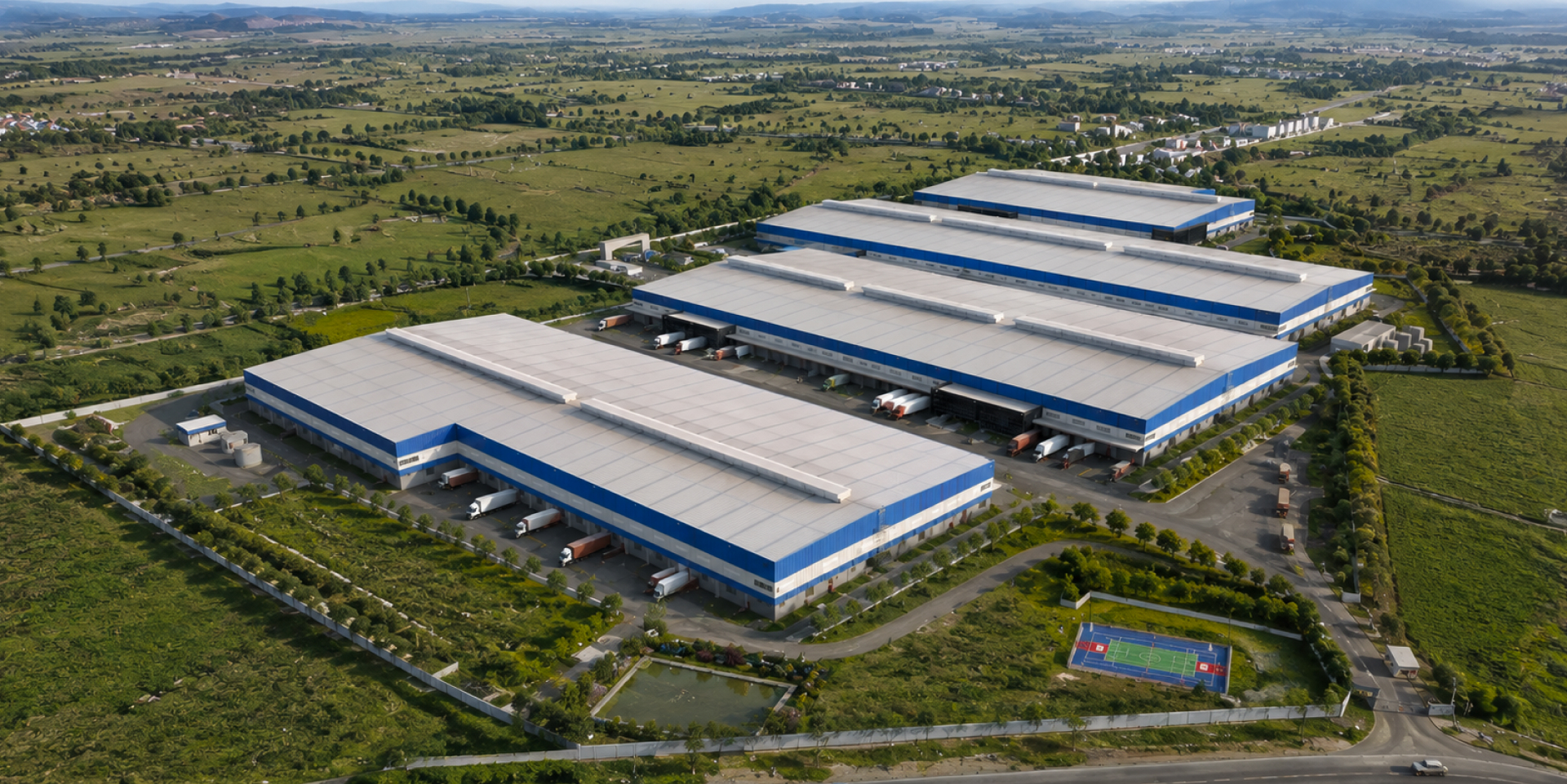
Equally important is master planning that prioritizes throughput. Design intelligence—such as wide internal roads for easy container truck maneuverability, optimized dock layouts, and motorized entry and exit gates—prevents congestion and delays. These features reduce turnaround times and minimize the bottlenecks that often translate into unaccounted operational costs over the life of a facility.
Long-Term Value: Sustainability and Scalability
Sustainability has moved from a compliance obligation to a strategic cost lever. ESG-aligned infrastructure is increasingly recognized as a driver of long-term operational savings. IGBC and EDGE-certified industrial parks, such as those developed by KSH INFRA, reduce energy and water consumption through renewable energy integration, efficient lighting, and advanced water management systems. Over time, these efficiencies translate into materially lower operating expenses.
Scalability is the second pillar of long-term value. In a dynamic business environment, facilities must be able to adapt to changing volumes, processes, and technologies. KSH INFRA’s Built-to-Suit (BTS) model addresses this need by allowing tenants to design layouts that align precisely with their operational flows from day one. This future-proofs investments by minimizing the need for costly retrofits or relocations as business requirements evolve.
Conclusion: Future-Proofing Your Bottom Line
Choosing an industrial park is a long-term strategic decision with implications that extend far beyond immediate occupancy costs. A partner-led approach—where the developer understands and supports long-term growth objectives—ensures that businesses can scale seamlessly without the disruption and expense of frequent relocations.
The final word is clear. In 2026, the most successful businesses will be those that view their industrial park location not as a static asset, but as a strategic anchor for cost efficiency, operational reliability, and sustainable growth. By aligning location, connectivity, infrastructure, and scalability, KSH INFRA enables organizations to future-proof their bottom line in an increasingly complex supply chain landscape.
Head Office
Gokhale Sanchit, Office No. 4, Survey No. 846,
Servants of India Society, Near Marathwada College,
Shivajinagar, Pune, Maharashtra – 411 004 (India)
Call Us: +91 20 2970 4000.
Email: [leasing@kshinfra.com]
Visit: [www.kshinfra.com]
Let’s build the future of industry…together!


