

Introduction: The 2026 Industrial Real Estate Revolution
As the industrial real estate sector approaches 2026, the narrative is shifting decisively. The era of indiscriminate land banking and long gestation projects is giving way to a more refined approach—one defined by precision, speed, and strategic execution. Occupiers and investors alike are no longer asking how much space they can acquire, but how quickly and how efficiently that space can be operationalised.
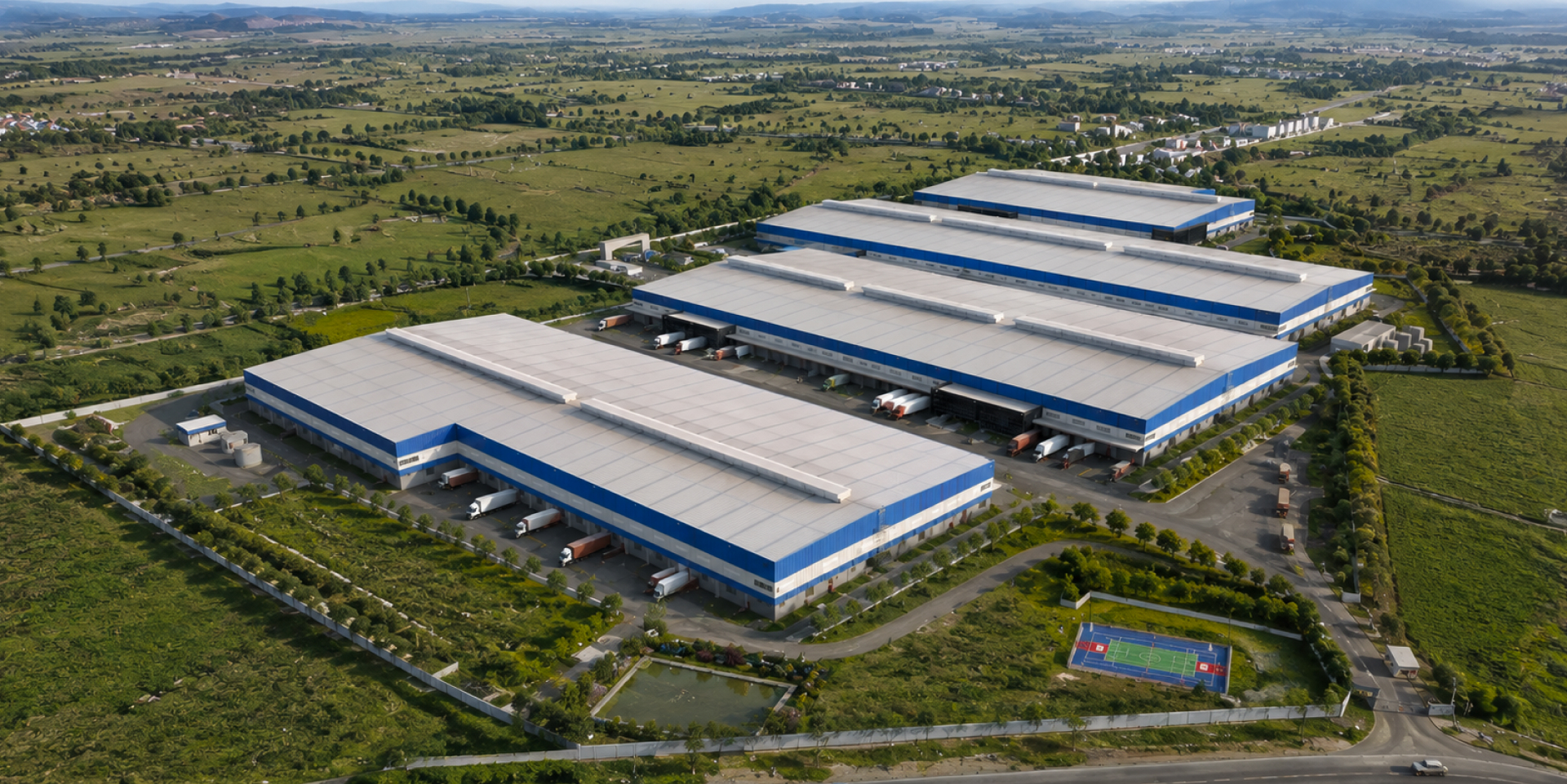
At the center of this transformation are ready-to-move (plug-and-play) industrial spaces. These are fully pre-approved, infrastructure-ready facilities designed to eliminate the traditional construction cycle. Instead of spending months—or even years—navigating approvals, utilities, and build-outs, businesses can step into facilities that are immediately deployable.
By 2026, this model is expected to dominate industrial real estate. The acceleration of e-commerce, resurgence of domestic manufacturing, and ongoing supply chain re-engineering have made speed and reliability non-negotiable. Ready-to-move industrial spaces are emerging as the smart play for occupiers seeking operational agility and for investors looking for stable, future-proof assets.
At KSH INFRA, this shift is not aspirational—it is foundational. The company’s focus on delivering Grade A industrial and logistics infrastructure reflects a deep understanding of what the next phase of growth demands: assets built for speed, resilience, and scalable expansion.
Speed to Market: The First Profit Driver
In modern industrial strategy, speed to market has become the first profit driver. The ability to commence operations quickly enables businesses to serve customers sooner, capture market share ahead of competitors, and respond dynamically to demand fluctuations.
Traditional industrial developments are often plagued by delays—ranging from regulatory approvals to on-site construction inefficiencies. Ready-to-move facilities eliminate these uncertainties. With modular construction techniques and pre-installed infrastructure, project timelines can be accelerated by 20–50% compared to conventional builds.
More importantly, plug-and-play environments allow immediate operational integration. Electrical systems, utilities, internal circulation, and safety infrastructure are already aligned, enabling disparate systems to communicate seamlessly from day one. This drastically reduces commissioning timelines and operational friction.
KSH INFRA has demonstrated this advantage consistently. Its facilities are designed to allow occupiers to commence operations within as little as two months of moving in, offering a decisive edge in industries where time lost is revenue lost.
Flexibility and Scalability: Adapting to Market Volatility
The industrial real estate market of 2026 will be defined as much by volatility as by opportunity. In response, businesses are increasingly prioritising flexibility over rigid, long-term commitments.
This has led to the rise of on-demand warehousing and flexible leasing models, which allow companies to scale operations up or down based on real-time market conditions. Rather than overcommitting capital to large, static facilities, occupiers prefer adaptable spaces that can evolve alongside their growth trajectory.
Scalable industrial, logistics, and warehousing solutions enable businesses to shift locations, reconfigure layouts, and adjust space utilisation without operational disruption. This flexibility significantly reduces risk—lower capital expenditure, optimised inventory management, and improved cash flow resilience.
KSH INFRA’s industrial parks are designed with this adaptability in mind. Strategically located with excellent connectivity, they provide not only immediate operational readiness but also the room and infrastructure necessary for businesses to expand tomorrow without relocating or compromising efficiency.
Maintaining High-Quality and Technical Standards
As occupiers become more sophisticated, Grade A industrial infrastructure is no longer a premium—it is a prerequisite. Older facilities, constrained by inadequate layouts and obsolete systems, are increasingly being phased out in favour of modern warehouses engineered for performance.
Grade A facilities offer higher floor load capacities, wider column spacing, superior docking infrastructure, and enhanced safety systems. These features directly impact operational efficiency, particularly for high-throughput logistics and manufacturing operations.
Equally critical is automation readiness. By 2026, industrial facilities must be power-ready, with robust electrical infrastructure and layouts that support automation, robotics, and advanced material-handling systems. Plug-and-play spaces are designed with these future requirements embedded from the outset.
Essential ready-built components typically include:
- Fully developed internal roads and sewerage systems
- Ready-built electrical lines, poles, and water connections
- Utility services such as fire hydrants, communication networks, and safety infrastructure
KSH INFRA integrates these elements as standard, ensuring that occupiers are not merely operational—but optimally positioned for next-generation industrial processes.
Sustainability and Government Policy: The 2026 Standard
Sustainability is no longer a differentiator; it is the baseline. Leading industrial developers are embedding environmental responsibility into their value systems through energy-efficient buildings, integrated green spaces, and sustainable water management practices.
This shift is being reinforced by policy. Government initiatives such as the National Logistics Policy and state-level “Plug and Play” industrial park frameworks are actively encouraging the development of ready-to-move, high-spec infrastructure. These policies reduce friction for occupiers and provide greater certainty for investors.
From an investment perspective, ready-to-move industrial spaces offer predictable rental income and lower vacancy risk. Occupiers depend on these assets for daily operations, making them sticky tenants and enhancing long-term asset stability.
Conclusion: Future-Proofing Your Business
As 2026 approaches, the message is clear: industrial success will belong to those who prioritise agility, speed, and quality. Ready-to-move industrial spaces deliver exactly that—allowing businesses to respond swiftly to market demands while minimising risk and capital exposure.
For occupiers and investors alike, the choice of developer becomes critical. The KSH INFRA edge lies in its unwavering commitment to trust, integrity, and world-class infrastructure. By focusing on Grade A, future-ready industrial parks, KSH INFRA is not just responding to the market—it is helping shape the industrial landscape of 2026 and beyond.
Head Office
Gokhale Sanchit, Office No. 4, Survey No. 846,
Servants of India Society, Near Marathwada College,
Shivajinagar, Pune, Maharashtra – 411 004 (India)
Call Us: +91 20 2970 4000.
Email: [leasing@kshinfra.com]
Visit: [www.kshinfra.com]
Let’s build the future of industry…together!


